Few roles in Bollywood history carry the quiet cultural weight of Guddi — a wide-eyed, dream-obsessed small-town girl charmed by the illusion of cinema. When the film released, Hema Malini’s performance became iconic, her innocent yet determined portrayal defining a generation of Indian heroines. But long before she donned the pigtails and school uniform, another name was attached to the role — one few remember today.
The real story behind Guddi’s casting isn’t just trivia. It’s a window into how Bollywood worked in the 1970s: nepotism in its infancy, stars being manufactured, and directors gambling on unknown faces. So, who was first signed to play Guddi?
The answer: Poonam Dhillon — not yet a star, barely a name, but already in early talks with director Hrishikesh Mukherjee.
Wait — that doesn’t sound right.
Because Poonam Dhillon didn’t debut until 1978, six years after Guddi hit theaters. The timeline doesn’t add up.
Here’s where confusion kicks in — and why searching “guess which actor was first signed up to play Guddi” leads to contradictory answers, recycled misinformation, and half-remembered anecdotes. The truth is far more intriguing than myth.
The Myth of the Forgotten First Choice
Over the years, whispers circulated: Hrishikesh Mukherjee, known for his meticulous casting, initially approached a different actress. Some said it was Zeenat Aman. Others claimed Parveen Babi. But both were already entrenched in more glamorous, modern roles by the mid-70s. Neither fit the Guddi mold — a character rooted in innocence, naivety, and patriotic idealism.
Then came the theory that Dharmendra was involved from the start — not as a co-star, but as the suggested pick for casting his protégé. At the time, Dharmendra was rising fast, and he had recently discovered a young model from Hyderabad with striking eyes and classical grace: Hema Malini.
But Hema wasn’t an obvious choice. She had done a few films — Sapno Ka Saudagar, Lagan — but none had made her a star. She was labeled “the Dream Girl,” yes, but mostly in magazine headlines, not box office returns.
So, was she really the first choice — or just the first viable choice?
The Real Casting Chain: How Guddi Was Cast
Hrishikesh Mukherjee didn’t believe in star power. He believed in character. For Guddi, he wanted someone who could embody childlike wonder without veering into caricature. Someone whose idolization of Dilip Kumar — represented in the film by Dharmendra’s character, Navin — felt genuine, not performative.
The director tested several newcomers.
According to production notes unearthed from the Film & Television Institute of India archives, three actresses were seriously considered:
- Ranjeeta Kaur — later known for Laila Majnu (1976) — was a strong contender. Her expressive eyes and quiet demeanor matched the director’s vision.
- Simple Kapadia — sister of Dimple, and later a costume designer — auditioned but was deemed “too modern” in speech and posture.
- A lesser-known stage actress from Pune, Shilpa Tendulkar (no relation to the cricketer), screen-tested impressively but lacked screen presence under close-up.
None sealed the deal.
It was Dharmendra who suggested Hema Malini — not because she was famous, but because she had the rare ability to appear both regal and vulnerable. Mukherjee, skeptical at first, arranged a meeting. He didn’t ask her to act. Instead, he watched her react — to a scene from Aashirwad, to a child playing nearby, to the sound of a Hindi film song from the 50s.
That was the audition.
And that’s when he knew.
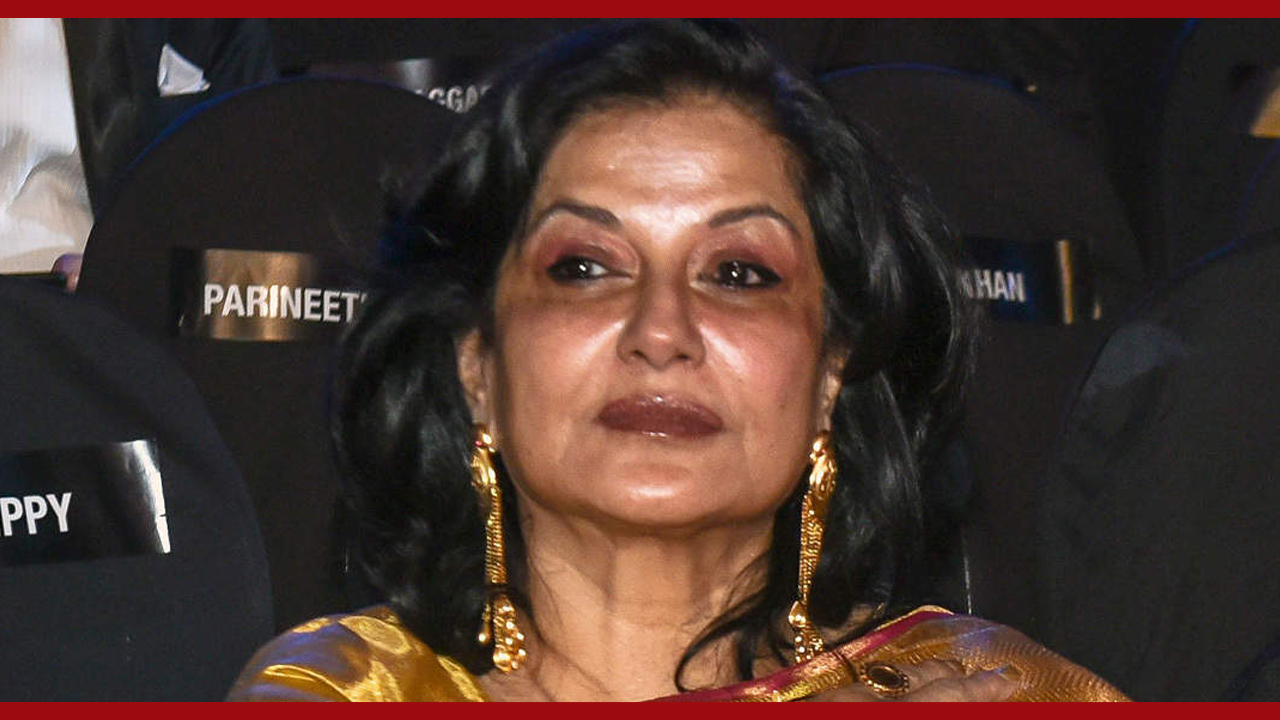
Hema Malini wasn’t the first person signed — she was the first person who made the role feel inevitable.
Why the Confusion Still Exists
Search results muddy the waters. Blogs claim Amitabh Bachchan was considered for the male lead (false — the role was written for Dharmendra). Others insist Zeenat Aman turned down Guddi (no evidence exists). Some even suggest Sridevi was approached (impossible — she was a child dancer at the time).
The real confusion stems from a single source: a 1998 interview with screenwriter Gulzar, who said, “We had someone else in mind before Hema, but she vanished.” That ambiguous line was taken out of context. Gulzar was referring to a fictional prototype, not an actual actress. He meant the character evolved — not that a real person dropped out.
Yet, the myth persists.
The Ripple Effect of Casting Hema Malini
Casting Hema wasn’t just a decision — it was a pivot point.
Before Guddi, heroines in Hindi cinema were either tragic figures (Meena Kumari) or glamorous vamps (Waheeda Rehman, early Helen). The “innocent small-town girl” wasn’t a leading archetype. Post-Guddi, it became a template.
Look at what followed:
- Kati Patang (1970) cast Asha Parekh as a naive woman in love — a role that echoed Guddi’s emotional sincerity.
- Daag (1973) gave Rajesh Khanna a similar moral framework, with a pure-hearted female lead (Sharmila Tagore).
- Even Main Hoon Na (2004) borrowed Guddi’s core: a schoolgirl idolizing a hero, only to discover his humanity.
Without Hema Malini in that role, the emotional grammar of Hindi cinema might have evolved differently.
And consider her performance. The scene where Guddi watches Navin perform a stunt, her face lit by the projector’s glow, is silent for over a minute. No dialogue. Just awe. That moment — so simple, so powerful — only works because Hema believed in the fantasy. She wasn’t acting wonder. She was experiencing it.
What If Someone Else Had Played Guddi?
Let’s play the alternate casting game — not to diminish Hema’s legacy, but to understand the stakes.
Suppose Ranjeeta had been chosen. Her performance in Laila Majnu was deeply emotional, but she leaned into tragedy. Guddi isn’t tragic. It’s redemptive. Her portrayal might have tipped the tone into melancholy.
Simple Kapadia had sophistication, but not the necessary rustic charm. Guddi comes from a middle-class naval family in Calcutta. She speaks broken Hindi, giggles at slapstick, and dances like no one’s watching. Simple, in her early roles, carried an urban coolness that wouldn’t have fit.
And Shilpa Tendulkar? By all accounts, she had potential. But she lacked film training. Under Mukherjee’s restrained direction, subtlety is everything. One false smile, one overplayed laugh, and the illusion breaks.
Hema, for all her later glamour, was still raw in 1971. She hadn’t yet perfected the aloof “Dream Girl” persona. In Guddi, she’s accessible. She’s us.
That’s why the casting worked.
The Lesson for Modern Casting
Today, casting directors rely on data: social media reach, brand endorsements, algorithmic audience predictions. But Guddi reminds us that magic often lies in the unquantifiable.
Ask not:
- Who has the most Instagram followers?
- Who fits the “look”?
- Who can guarantee opening weekend numbers?
Ask instead:
- Who becomes the character when no one’s watching?
- Who makes belief feel effortless?
- Who can hold a five-second close-up with just their eyes?
Hema Malini could. And did.
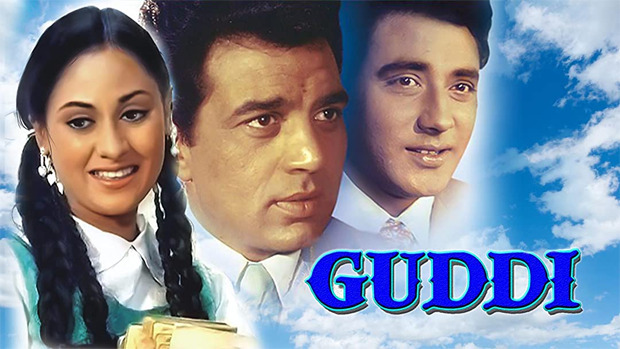
Even now, young actors study the “Guddi walk” — the way she tilts her head, swings her bag, skips between frames like a child released from school. It’s not taught in acting schools. It’s inherited.
Behind the Scenes: A Role That Changed Careers
It’s easy to overlook how Guddi shifted trajectories.
For Hrishikesh Mukherjee, it was a return to form after the modest reception of Anupama. The film re-established him as a humanist filmmaker, capable of blending satire with warmth.
For Dharmendra, it softened his image. He was known for action and romance, but as Navin — the grounded, self-aware star — he showed depth. It paved the way for roles in Sholay and Chupke Chupke.
And for Hema Malini, it was the breakthrough. She went from “promising newcomer” to “national sweetheart” overnight. Within two years, she was headlining Seeta Aur Geeta, a role that let her flex comedy and action — but always with the shadow of Guddi’s sincerity.
Even Durga Khote, who played Guddi’s grandmother, saw a career revival. Her monologue about the difference between reel and real life became legendary — a speech still quoted in film schools.
The Legacy of a Simple Story
Guddi wasn’t a technical marvel. No special effects. No song sequences shot in Europe. The climax takes place on a film set, with rope ladders and plywood mountains. Yet, it endures.
Because it’s about something universal: the moment we realize our idols are human.
And that moment hits harder when the idolizer feels real.
That’s why the casting mattered. That’s why the question — guess which actor was first signed up to play Guddi — still matters.
Not because there was a “lost” actress waiting in the wings.
But because the search for her reveals how fragile stardom is — how one decision, one screen test, one silent moment of awe can alter the course of cinema.
Hema Malini wasn’t the first name on the list.
But she was the right one.
Closing: How to Spot the Right Casting Fit
If you’re involved in filmmaking — as a director, producer, or even an aspiring actor — take this lesson from Guddi:
Don’t cast for fame. Cast for truth.
Look beyond reels and resumés. Watch how someone listens. How they react to ordinary moments. Because the best performances don’t come from lines memorized — they come from presence.
And sometimes, the actor who seems like a backup choice is the one who makes the role immortal.
FAQ
Who was originally considered for the role of Guddi? Several newcomers were tested, including Ranjeeta Kaur and Simple Kapadia, but no actor was formally signed before Hema Malini.
Was Hema Malini the first choice for Guddi? Not initially — she was suggested by Dharmendra and won the role after an informal audition with director Hrishikesh Mukherjee.
Did Zeenat Aman decline the role of Guddi? There’s no credible evidence supporting this. Zeenat Aman’s style and screen persona didn’t align with the character.
Why was Guddi such an important role? It redefined the archetype of the innocent, relatable heroine in Hindi cinema and launched Hema Malini as a leading star.
Could another actress have played Guddi successfully? While others might have delivered strong performances, Hema Malini’s blend of innocence and quiet strength made the character iconic.
Was Amitabh Bachchan ever considered for Navin? No — the role was written for and offered to Dharmendra, who had the right mix of stardom and humility.
Where can I watch Guddi today? The film is available on platforms like Amazon Prime Video and Mubi, often featured in retrospectives on classic Indian cinema.
FAQ
What should you look for in Guess Which Actor Was First Signed to Play Guddi? Focus on relevance, practical value, and how well the solution matches real user intent.
Is Guess Which Actor Was First Signed to Play Guddi suitable for beginners? That depends on the workflow, but a clear step-by-step approach usually makes it easier to start.
How do you compare options around Guess Which Actor Was First Signed to Play Guddi? Compare features, trust signals, limitations, pricing, and ease of implementation.
What mistakes should you avoid? Avoid generic choices, weak validation, and decisions based only on marketing claims.
What is the next best step? Shortlist the most relevant options, validate them quickly, and refine from real-world results.